Not all varicose veins are treated the same way. Endovenous laser, sclerotherapy and varicectomy (surgery) are three different methods with different aims. The choice does not start from the name of the method, but from an assessment of the veins, the symptoms and the patient’s medical history.
At Aura Medical Clinic in Tirana, all three methods are performed by Prof. Dr. Albi Fagu, head of the Vascular Surgery Department at “Shefqet Ndroqi” Hospital. This article explains the main differences and the questions worth asking at the consultation.
The main differences
| Point | Endovenous laser (EVLA/EVLT) | Sclerotherapy | Varicectomy (surgery) |
|---|---|---|---|
| How it works | A laser fibre is inserted into the vein and closes it from the inside. | A solution is injected into the vein and closes it. | The damaged sections of superficial veins are removed surgically. |
| When it is discussed | For the main superficial veins of the leg, when the assessment shows this. | For small veins and visible capillaries. | For more complicated cases. |
| Incisions | No large incisions. | No surgery. | A surgical procedure. |
| Where it is done at Aura | On Aura’s premises. | On Aura’s premises. | In Aura’s operating theatre. |
The table summarises general differences. It does not decide which method is right for you and does not replace the specialist’s assessment.
Endovenous laser: closing the vein from the inside
In endovenous laser treatment (EVLA or EVLT), a laser fibre is inserted into the damaged vein and the laser energy closes it from the inside. The procedure is done without large incisions. The closed vein no longer carries blood, which continues through other, healthy veins.
Surface laser is something different: it is used for capillaries and small visible veins, not for the main veins. When someone talks about “laser for varicose veins”, ask which of the two is meant.
Sclerotherapy: injections for small veins
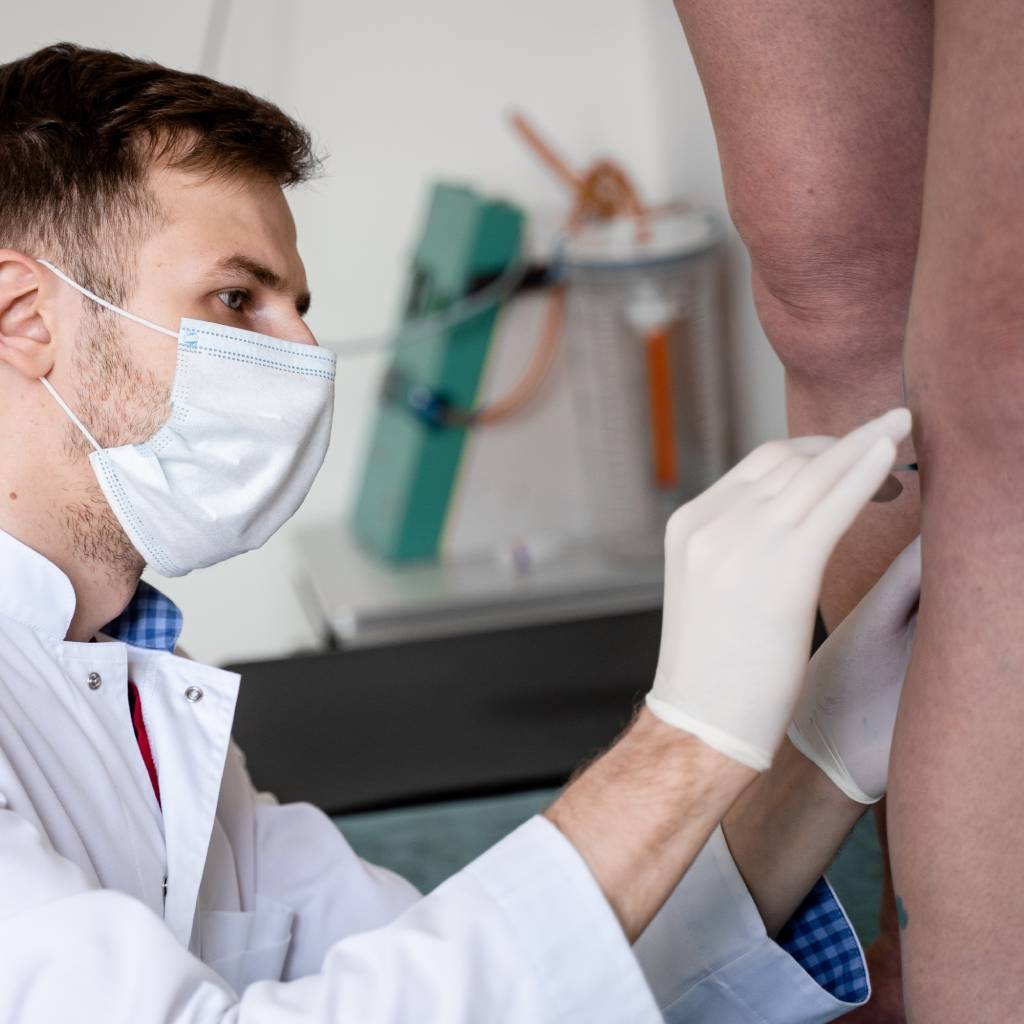
In sclerotherapy, the specialist injects a solution into the vein, which closes it. It is used mainly for small veins and visible capillaries, without surgery. The number of sessions depends on the extent of the veins and is set after the assessment. Read more about sclerotherapy at Aura.
Varicectomy: when surgery is needed
Varicectomy is the surgical removal of damaged sections of superficial veins. At Aura, Prof. Fagu uses it for more complicated cases, when the other methods are not the right solution. The procedure takes place in Aura’s operating theatre, and the patient receives instructions on walking, compression and follow-up appointments after surgery.
How the method is chosen
The choice depends on the size and location of the veins, on symptoms such as heaviness, pain or swelling, on circulation and on medical history. The assessment often includes a Doppler ultrasound of the veins, which shows how blood flows and which veins are affected. In some cases a combination may be proposed, for example laser for the main vein and sclerotherapy for the small veins.
Do not choose the method only by its name or by someone else’s experience. Two people whose varicose veins look the same may need different treatments.
Questions for the consultation
- Which veins are affected, and how extensive is the problem?
- Is a Doppler ultrasound needed before the decision?
- Why is this method proposed rather than another?
- If laser is mentioned, is it endovenous laser or surface laser?
- Might more than one method or more than one session be needed?
- What should I report about medicines, clotting problems or previous procedures?
- What instructions will I receive on walking, compression and activity after treatment?
- When will the follow-up appointments be?
Read more about varicose vein treatment in Tirana at Aura Medical Clinic. A consultation with Prof. Dr. Albi Fagu sets the individual plan.